Cylburn Avenue
Lady in the LakeCylburn Avenue runs through northwest Baltimore, a street whose name recurs throughout the novel as a site of death, memory, and revelation. It is the place where the murdered girl Tessie Fine is found, where the city's racial boundaries are made visible, and where Maddie Schwartz's past and present collide. The avenue functions as a geographical anchor for the novel's central mystery, linking the discovery of a body to the broader social landscape of 1960s Baltimore.
The Discovery of Tessie Fine
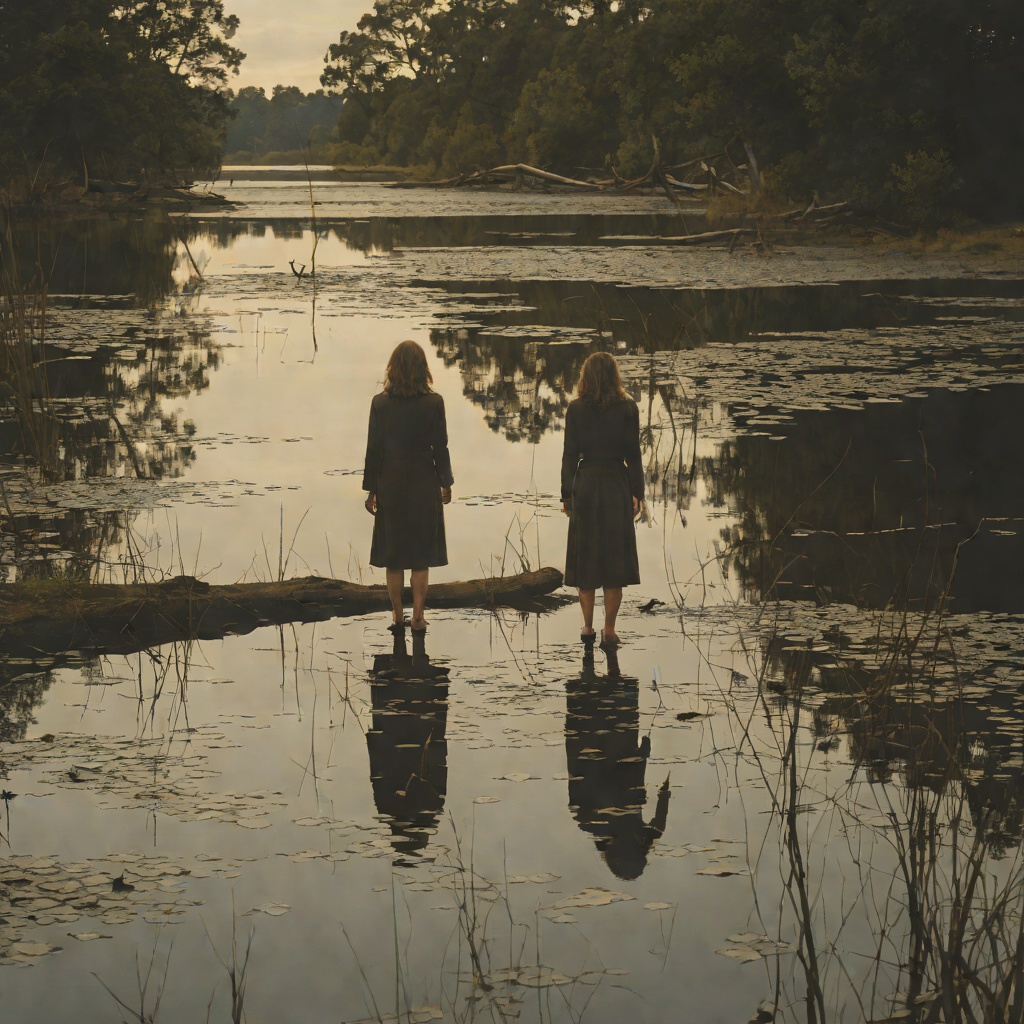
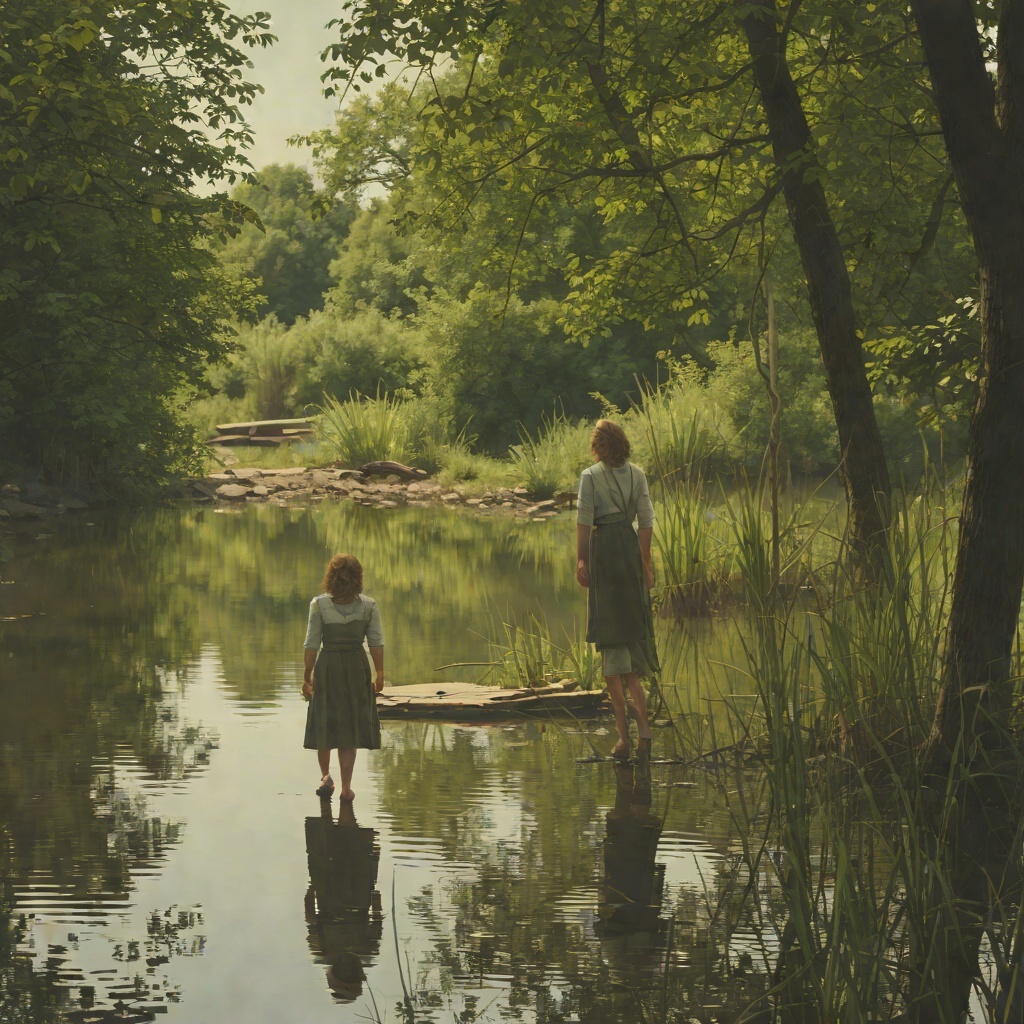
The most significant event on Cylburn Avenue is the discovery of Tessie Fine's body. Maddie Schwartz, acting on what she later calls "just a hunch," walks down the final trail to the fence line along the avenue. The land dips there, creating a gully, and the fence is broken and torn open. From the street, the bottom of the gully is invisible; only from the hill above can one see what Maddie sees: a bright silver crescent on the heel of a shoe, attached to a leg, a body, a head, a face. The face is too composed, too still—no child's face is ever this still. Tessie Fine, in her loden-green coat and brown tights, has almost disappeared into the landscape, but her red tresses flame like out-of-season wildflowers, and her shoes shine on, catching the last rays of light.
The discovery is later confirmed by police officers who arrive at the scene. One officer, reflecting on the case, notes that when they reach Cylburn Avenue, at first there is no body to be seen. The dark-haired woman who reported the body frets, insisting she was right there. The younger woman says to go a little farther. Night has fallen, thick and fast, and they get out their flashlights. Then one officer's light catches a flash of something, and there she is: Tessie Fine, her neck snapped like a chicken's. No coroner is needed to figure that out.
A Site of Memory and Desire
Cylburn Avenue is not only a place of death but also a place of personal memory for Maddie. When asked how she thought to look there, she cannot say the truth: that she remembered parking there with all the boys she dated, or that she once tried to get her future husband to make love to her there, but he wanted to wait because he thought she was a virgin. Instead, she says simply, "Just a hunch." The avenue thus holds a private history of adolescent desire and restraint, a past that Maddie cannot publicly acknowledge but that secretly guides her investigative instincts.
This private history resurfaces in another context when Judith Weinstein reports that her brother Donald wanted to park on Cylburn Avenue. Maddie says no, it is not weird, but thinks yes, it is—though not as weird as what she herself wanted to do the night before. She reflects that she is becoming a libertine, a word she first heard from her first lover, who moved away long ago. The avenue is thus a recurring site of illicit or unspoken longing, a place where the city's young people go to be alone, and where Maddie's own past romantic life is buried.
The Avenue in the City's Geography
Cylburn Avenue sits within a larger geography of changing neighborhoods and racial boundaries in 1960s Baltimore. Maddie's apartment on Gist Avenue, while on the right side of Northern Parkway, is in a neighborhood that is "decidedly mixed," as she puts it—mixed on its way to being not so mixed. She is a solitary white woman in a neighborhood of maids and laundresses, milkmen and streetcar conductors, and the neighbors snub her as if she were the undesirable one. The avenue and its surroundings thus mark the shifting racial lines of the city, where a white woman's presence is visible and remarked upon, and where a dead white girl's body becomes a matter of public concern in a way that a Black woman's might not.
The avenue also connects to the broader landscape of the novel's investigation. The Star's nighttime cop reporter, John Diller, describes the two women at the scene, and Bob Bauer, the cartoonist, uses his sources to unearth one of their names. The discovery on Cylburn Avenue sets in motion a chain of journalistic and police activity that will eventually lead to the Lady in the Lake, Cleo Sherwood, and to the revelation that she is not dead at all. The avenue is thus the point of origin for the novel's central mystery, the place where a single glimpse of a shiny shoe sets everything in motion.
A Threshold Between Worlds
Cylburn Avenue functions as a threshold between the visible and the hidden, the living and the dead. The gully that hides Tessie Fine's body is invisible from the street; only from above can one see what is concealed below. This spatial arrangement mirrors the novel's larger concern with what is hidden in plain sight—the bodies of women, the secrets of the city, the truths that people cannot or will not speak. The avenue is where the landscape itself conspires to conceal, and where a chance glance can reveal what the city has tried to bury.
For Maddie, the avenue is also a threshold between her past and present selves. The girl who parked there with boys, who tried to seduce her future husband, is the same woman who now walks the trail and finds a dead child. The avenue holds both her youthful desire and her adult discovery, binding together the personal and the investigative, the romantic and the gruesome. It is a place where memory and death intersect, and where the novel's central act of seeing—of noticing what others overlook—begins.